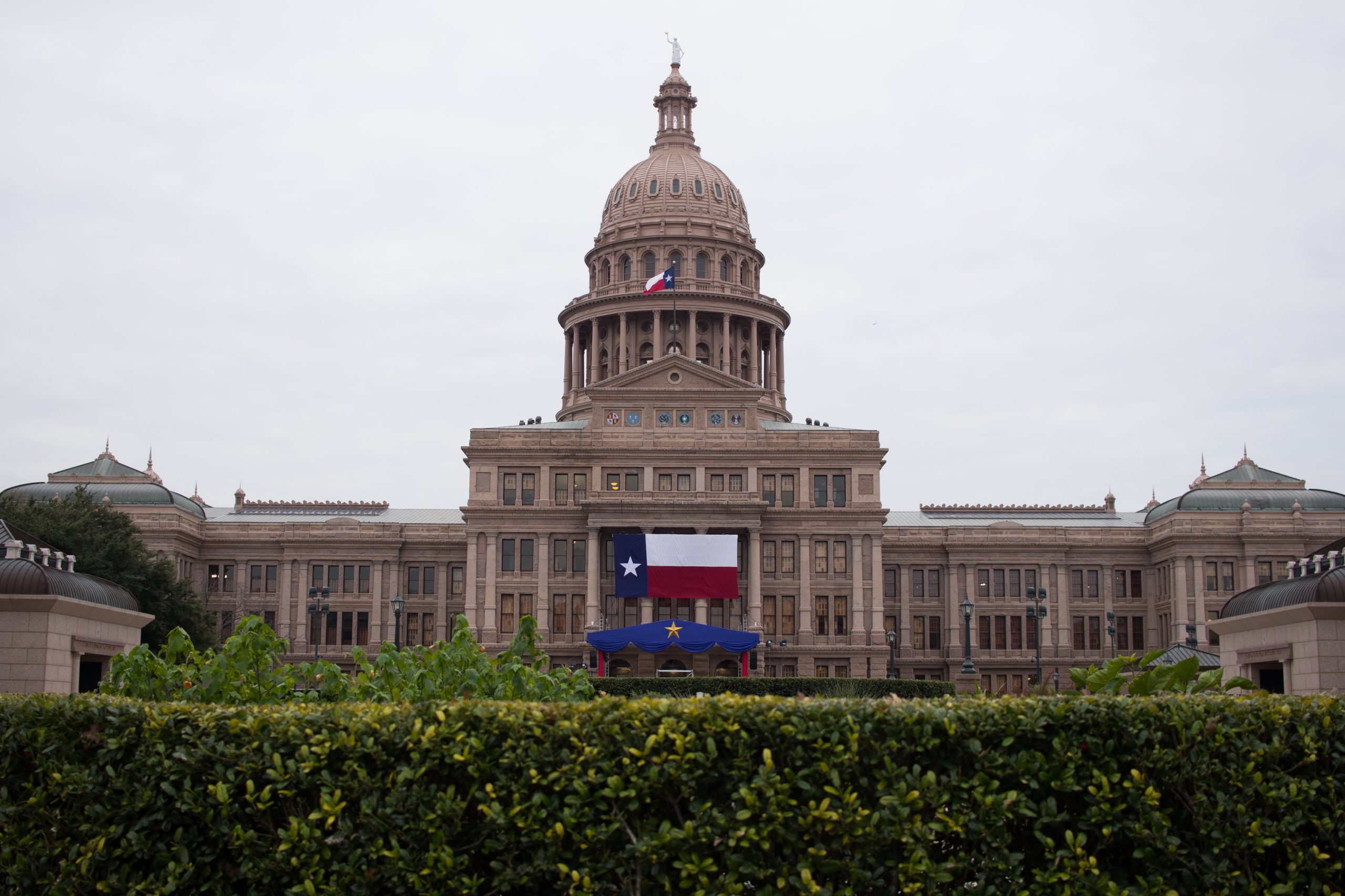
This Thursday May 9th, the Texas House of Representatives votes on HB1608 to determine whether our state will respect the privacy of your mobile phone geolocation data. Mobile phones are designed to track everywhere they go, and we think law enforcement should have to demonstrate probable cause to a judge before gaining access to such intimate information about one’s whereabouts, associations, and activities.
EFF-Austin, as a founding member of the Texas Electronic Privacy Coalition, has been helping shepherd this legislation forward from its inception. This is a crucial moment in the bill’s progress, and we need you to help remind our State Representatives that they should vote YES on HB1608.
Here’s an online petition to do just that. This will send an email to your state Rep letting them know that you want them to support HB1608. It takes just a few minutes to help ensure the privacy of Texans’ geolocation data.
Thursday is the LAST day for bills to receive a House floor vote for the next two years. We’ll be sitting in the public gallery to observe the show – which could get pretty interesting given the nature of the bill! If you’re interested in joining us, or helping pass out flyers to legislators before the vote, sign up on our volunteer page and we’ll be in touch.
Please send your petition here then let your fellow Texans know! And thank you for your time.
Law enforcement agencies have been allowed, even encouraged, to follow the actions and movements of citizens more closely at a time when digital technologies have amplified their ability to do so, and laws to protect privacy and ensure that the wheels of justice are not rolling over our rights haven’t kept up.
EFF-Austin is currently focusing on the potential for surveillance in the digital era, and the extent to which technologies for surveillance have evolved ahead of the laws that would protect innocent citizens from scrutiny and worse. We have worked with others to create a privacy coalition specifically focused on legislation limiting access to cellphone records that track our movements, a possibility that didn’t exist when relevant statues were initially drawn. We are not saying that police should not be able to get access to these records in any case, but that to do so should require judicial oversight, i.e. a warrant. This is part of a larger conversation about privacy that is beginning to drive legislative efforts in many states, and at the Federal level.
As a first important step, we formed the Texas Electronic Privacy Coalition with other organizations concerned about limiting surveillance and protecting privacy. The coalition is supporting legislation in the Texas House and Senate for which there will be hearings on March 26, which we’re calling Privacy Day. We encourage our supporters to offer comments at the Capitol. (See See EFF-Austin Vice-President Greg Foster’s post on how to participate in public hearings at the Texas Legislature.
HB 1608 and SB 786 will be heard next week in both the House Criminal Jurisprudence and Senate Criminal Justice committees. These bills will require police to get a warrant if they want to read the detailed location data held by cell phone companies. The House committee will also hear legislation to restrict drone surveillance. The public is encouraged to drop by each hearing and testify or otherwise enter their comment into the record.
One of the most important moments in a piece of legislation’s lifecycle is its public hearing. This is the opportunity for a bill to be formally considered by its assigned committee, and a decision made as to whether the bill will be reported out of committee to the full legislative body favorably, unfavorably, or deferred for additional consideration.
a public hearing where testimony is to be heard, and where official action may be taken, on bills, resolutions, or other matters;
After a bill is filed and referred to a particular committee, the committee Chair, in consultation with other committee members and the bill author, decides when to schedule the bill’s public hearing. As committees must consider many bills during each legislative session, Texas House committees generally hold public hearings on a weekly basis.
Public Hearings are PUBLIC
As the name indicates, public hearings are open to the public. Texas House Rule 4, Section 12 states:
All meetings of a committee or subcommittee, including a calendars committee, shall be open to other members, the press, and the public unless specifically provided otherwise by resolution adopted by the house.
This means you can show up to observe and report on the proceedings of your elected officials. There is an open wireless network available throughout the Capitol Complex called Public-Capitol should you want to broadcast your observations: http://www.legis.state.tx.us/resources/wireless.aspx
You Can Be a Witness
Citizenship grants you the right to participate more actively in committee public hearings by becoming a witness. You and organizations you are empowered to represent have three options for participating and making your voice heard in relation to any particular bill heard by a committee:
Show up and register your position as “For”, “Against”, or “Neutral” in relation to a bill
Show up, register your position, and file written comments which are attached to the meeting minutes
Show up, register your position, and testify before the committee
Showing Up and Registering Your Position
Each of these options for participating in committee public hearings requires your physical presence, even if you are just registering your position. Traditionally, registration has entailed filling out a paper card (stacked near the entrance to the committee public hearing room) and delivering the card to the committee clerk (typically seated in the front of the room below the committee members). Recently, the Legislature has taken steps to allegedly make this process a little easier by installing iPad kiosks in the Capitol Complex to enable witness registration. You can also use your own iPad to connect to the House Witness Registration system from within the Capitol Complex, and register without having to locate a kiosk.
The video shows that you can register your position as “For” a bill, “Against” it, or “Neutral”. The “Neutral” position can be important if you are testifying on behalf of an organization that cannot perform political lobbying, as you can still present information to inform committee members. Texas House Rule 4, Section 10′s Explanatory Notes state:
Many times, persons representing an association or executive branch agency will appear before a committee to testify “on” a particular measure. Such persons often refer to themselves as “resource witnesses” because they are not taking a position for or against the measure.
Filing Written Comments
In addition to registering your or your organization’s position on a bill, you may also file written comments. Texas House Rule 4, Section 20(c) states:
Sworn statements submitted in paper format for those persons recognized by the chair to address the committee shall accompany the copy of the minutes of the meeting filed with the committee coordinator.
Comments submitted along with your sworn statement become part of your statement. Keep your comments concise, generally no more than a paragraph or a page. Make copies for each of the committee members and the committee clerk (and for others, including the press, who might be amenable to learning about your position). Once you’ve filled out the witness registration card, hand the committee clerk your comments along with your sworn statement on paper. Please note the emphasis on paper here: you cannot submit comments electronically which leaves an open question as to whether one can use the online House Witness Registration system when intending to file written comments.
Testifying
You can also register to provide spoken testimony at a committee public hearing. When a bill is presented before the committee, witnesses who have asked to speak are called (generally in the order in which they registered) to present their testimony for three minutes each (longer depending on the mood of the committee). Committee members then have an opportunity to ask you questions. Providing spoken testimony can be powerful – or it can unintentionally undermine your efforts. Jon Roland has put together a good summary of points to consider when forming and delivering testimony. http://obitur-dictum.blogspot.com/2012/08/testifying-to-texas-legislature.html
Remote and Video Testimony
In certain circumstances, witnesses do NOT have to be physically present at a public hearing to provide testimony. Rule 4, Section 20(g) states:
The chair may recognize a witness who has been invited by the committee to attend the meeting but is not present in the same physical location as the committee to testify before the committee through an Internet or other videoconferencing system…
In this circumstance, it sounds like the committee itself would need to invite a remote witness.
Rule 4, Section 20A provides for “Video Testimony”:
The committee coordinator shall…establish procedures to permit a person to submit testimony relating to measures under consideration by a committee to the committee in the form of an online video. The procedures established must ensure that testimony submitted in the form of a video is available to the public on the Internet. Online video testimony submitted to the committee may not exceed three minutes.
Recordings of Public Hearings
House Video/Audio Services are tasked with providing live web-casts and broadcasts of committee and subcommittee meetings, but cannot do so for all public hearings. So you may be able to watch committee public hearings online. Here is the House Weekly Broadcast Schedule: http://www.house.state.tx.us/video-audio/broadcast-schedule/
Furthermore, audio recordings are generated at every public hearing and are subsequently available for review with a little wrangling:
All House committee clerks are responsible for recording audio of every public hearing. You may listen to these recordings in CD or cassette format in the House Communications, Video/Audio Services office, located in the John H. Reagan Building at 105 West 15th Street, Room 330, Austin, TX. (Just North of the State Capitol) Copies of the audio recordings may be purchased for a fee. For more information, call (512) 463-0920. You may send your signed Open Records Request letter via fax at (512) 463-5729 or mail to the Texas House of Representatives, c/o Video/Audio Services, P. O. Box 2910, Austin, TX 78701.
Make Your Voice Heard
Your options for participating in public hearings of committees of the Texas House of Representatives before, during, and after the fact are substantial. Prepare in advance and make sure you know these important pieces of information before you arrive at the Capitol Complex:
The bill number you are interested in
Which committee the bill is referred to
The date, time and location of the public hearing
Good luck! Make your perspectives and opinions known.
Join the Electronic Frontier Foundation, EFF-Austin, and iSEC Partners for a special gathering to celebrate digital freedom! Learn, discuss, and network with online civil liberties supporters and meet the people behind the world’s leading digital rights organizations. Raise a glass with us and discover what’s next in free expression, digital privacy, and protecting the future [...]
In early January of this year, as the Texas state legislature inaugurated its 83rd biennial session, EFF-Austin connected with a group of citizen activists concerned about the hidden exchange of information between telecommunications companies and law enforcement agencies. Together with the ACLU of Texas, Texans for Accountable Government, and the widely read and respected criminal [...]
Press release from EFF.org: The Electronic Frontier Foundation (EFF) asked a federal judge today to protect the free speech rights of an online archive of laws and legal standards after a wrongheaded copyright claim forced the removal of a document detailing important technical standards required by the federal government and several states. EFF and co-counsel [...]
Join EFF-Austin and Cory Doctorow on Friday, February 22 at the Tiniest Bar in Texas, 817 West Fifth Street in Austin, 7-10pm! We’ll be jammin’, talking about computers, freedom and privacy – with music by DJ Strangevibe and conversation with NY Times bestselling author Cory Doctorow! This is also the launch of the Texas Electronic [...]
In late January, Aaron Greenspan announced “Operation Asymptote” to the influential Liberation Technologies mailing list: In case anyone is interested, I’ve built a tool to crowdsource the downloading of PACER materials. You can find details here: http://www.aarongreenspan.com/writing/essay.html?id=85 http://www.plainsite.org/asymptote/index.html I looked into Operation Asymptote, and recommend it as an effective and poetic tribute to Aaron Swartz‘s [...]
Last week, I attended the monthly meeting for Open Austin, a group which has been around for several years promoting better governance through open technologies. I’m writing to draw attention to their recent successes and increasing importance to the City of Austin. There’s an interesting history to be written about the formation of Open Austin [...]
EFF-Austin advocates establishment and protection of digital rights and defense of the wealth of digital information, innovation, and technology. We promote the right of all citizens to communicate and share information without unreasonable constraint. We also advocate the fundamental right to explore, tinker, create, and innovate along the frontier of emerging technologies.
Audio history of EFF-Austin (and why we're not formally connected to the national Electronic Frontier Foundation)
There is exciting news out of the Green Mountain State this week: folks in Vermont are so fed up with patent troll abuse that they are taking matters into their own hands. With trolls filing thousands of lawsuits every year and blanketing the country in threat letters, states are looking for ways to protect victims—especially small entities that lack the res […]
With patent trolls and patent wars creating a massive drag on innovation, a number of companies have investigated ways to navigate the patent system while still promoting openness and competition. Twitter has been especially active in this space—both by fighting back against patent trolls and in giving its own developers a voice through its Innovator’s Paten […]
Today, EFF filed a motion in a secret court. This secret court isn’t in a developing nation, struggling beneath a dictatorship. It’s not in a country experimenting for the first time with a judiciary and the rule of law. And, as Wired recently noted, it’s “not in Iran or Venezuela, as one might expect.” No, the court is here, in the United States (it’s in Wa […]
The journalism world has been rightly outraged by the Justice Department dragging the Associated Press (and now a Fox News reporter) into one of its sprawling leak investigations. As we wrote last week, by obtaining the call records of twenty AP phone lines, “the Justice Department has struck a terrible blow against the freedom of the press and the ability o […]
EFF has been on the ground in Lima, Peru for the 17th round of Trans-Pacific Partnership (TPP) negotiations. The TPP is a secretive, multinational trade agreement, and one chapter carries overreaching copyright enforcement provisions that pose a huge threat to the Internet and users' access to devices and digital content. This is a video from a protest […]
A survey by the Pew Internet and American Life Project and the Berkman Center for Internet and Society found that while teens are disclosing more personal information on social media, the vast majority are actively taking steps to protect their privacy. 60 percent of teen Facebook users keep their profiles private and visible only to a select group of friend […]
EPIC Administrative Law Counsel Khaliah Barnes testified before the Colorado State Board of Education on privacy issues concerning inBloom and other companies that acquire student information. In response to public outcry over a pilot program which grants these companies access to sensitive student data, the Colorado Board of Education hosted a public sessio […]
EPIC filed a complaint with the Federal Trade Commission against Snapchat, the publisher of a mobile app that encourages user to share intimate photos and videos. The company represents that users can make photos and videos "disappear forever." In fact, the photos can be retrieved by others after they should have vanished. The EPIC complaint implic […]
Members of the bipartisan Privacy Caucus sent a letter to Google seeking answers to questions about Glass, a wearable computer that routinely records video and audio, and gathers locational data. Among several questions, the Members of Congress asked "how Google plans to prevent Google Glass from unintentionally collecting data about the user/non-user w […]
Following the controversy concerning the Justice Department’s subpoena of Associated Press calling records, the Obama administration announced support for a media shield law. The White House has asked Senator Charles E. Schumer to reintroduce the Free Flow of Information Act, a bill that would limit government access to information about confidential sources […]